Australian Digital Accessibility Delivery Partner for Government & Enterprise
WCAG 2.2 audits, document remediation, organisational uplift, training and assistive-technology user testing - delivered by certified Australian specialists. From documents and collateral to websites and apps.
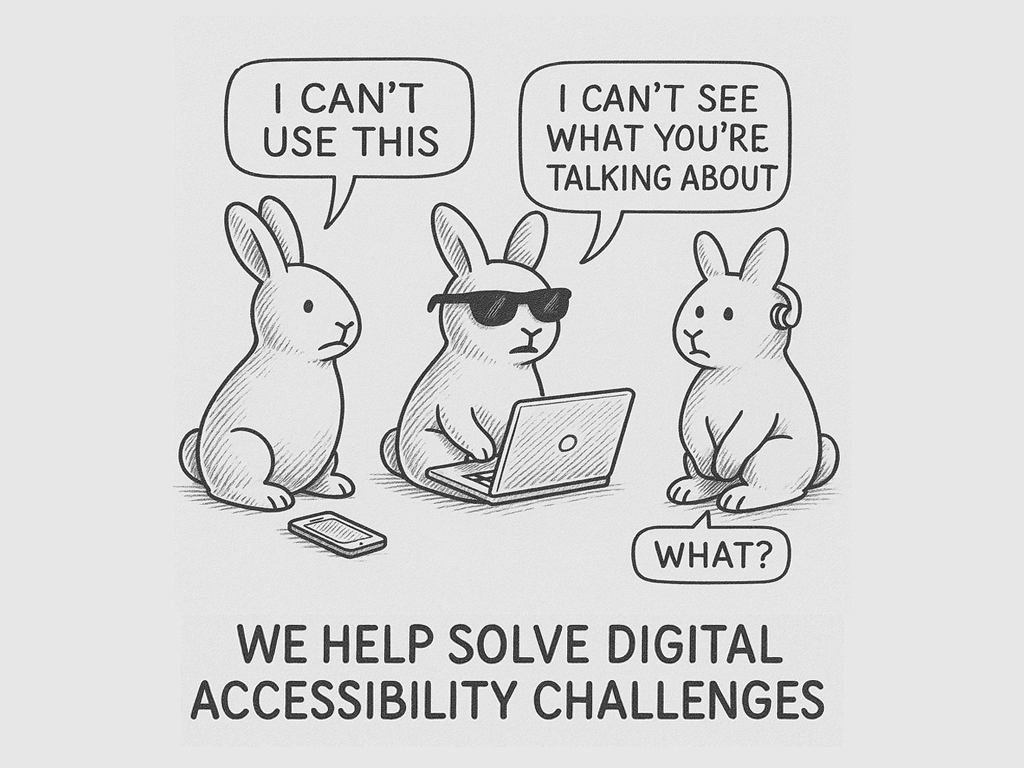
What is ExceedAbility?
ExceedAbility is an Australian digital accessibility delivery partner for government and enterprise. We deliver WCAG 2.2 audits, document and PDF remediation, organisational uplift, role-based training and assistive-technology user testing - with reporting suitable for DTA, Digital Service Standard and investment oversight obligations.
End-to-End Accessibility Services
Advice, audit and compliance, testing, support and remediation for documents, websites and apps.
Organisational Uplift
Transform your accessibility capability using the W3C Accessibility Maturity Model. Take our 90-second self-assessment to get started.
Learn about organisational upliftAdvice & Strategy
We help plan accessibility and usability improvements, embed accessibility into governance, procurement, and delivery practices.
Learn about advice & strategyAudit & Compliance
We audit websites, apps, and documents for compliance with WCAG 2.2, EN 301 549, Section 508, and other global standards.
Learn about audit & complianceAccessible Documents
We remediate documents of all types to meet WCAG and PDF/UA standards, from reports and brochures to forms and training materials.
Learn about accessible documentsAccessibility Testing
We combine automated testing, expert reviews, and assistive technology testing to ensure real-world usability for people with disabilities.
Learn about accessibility testingTraining
We deliver tailored accessibility training for teams across design, development, content, compliance, and leadership.
Learn about training“A rising tide lifts all boats.”
Helping You Understand Digital Accessibility
Digital accessibility addresses barriers across a wide range of abilities. We help organisations create inclusive experiences for everyone.
As the W3C Web Accessibility Initiative highlights, people experience varying degrees of auditory, cognitive, physical, speech, and visual disabilities, whether from birth, illness, injury, or age. Inclusive design benefits not just people with permanent disabilities but also those with temporary impairments and situational limitations.
Visual Disabilities
People who are blind or have low vision rely on screen readers, text enlargement, and high contrast to navigate digital environments.
Learn about visual disabilities →Auditory Disabilities
People who are deaf or hard of hearing face barriers when content relies on sound. Captions, transcripts, and visual alternatives provide access.
Learn about auditory disabilities →Cognitive & Learning
Users with cognitive, learning, or neurological differences may experience difficulties with memory, attention, or processing information.
Learn about cognitive & learning disabilities →Physical Disabilities
People with limited dexterity or mobility rely on keyboards, switches, or voice control instead of a mouse to interact with digital content.
Learn about physical disabilities →Speech Disabilities
People with speech impairments face barriers with voice-activated systems. Text-based alternatives ensure voice input is never the only option.
Learn about speech disabilities →Informed by the W3C WAI Diverse Abilities and Barriers resource and the W3C Introduction to Web Accessibility.
Accessibility tools and guides
Self-service tools, guides and resources to assess, understand, and improve your digital accessibility.
Accessibility Maturity Self-Assessment
Evaluate your organisation's digital accessibility maturity using the W3C Accessibility Maturity Model framework.
ToolWCAG Compliance Criteria Search
Search and filter all WCAG success criteria by level, principle, version, disability type and primary focus area.
ToolAccessibility Guide
Practical guidance for creating accessible documents with proper structure, headings, alternative text, and reading order.
GuideDocument Accessibility Tool
Identify and resolve common accessibility issues in your documents, with worked examples and a checklist of frequent failures.
ToolAccessible Online: Learn The Basics (POUR)
Accessible Online platform and resources for learning about digital accessibility fundamentals.
ResourceSecurity, Privacy & Accessibility (SPA) Framework
Explore why accessibility is the essential third pillar of digital compliance and why security and privacy mean nothing to a user who cannot access them.
FrameworkAccessibility Knowledge Growth Cycle
A continuous improvement framework for building and maintaining accessibility expertise across your organisation. Explore the six interconnected stages.
FrameworkAccessibility Statement Generator
Generate a compliant, professional accessibility statement tailored to your organisation.
ToolAccessible Modals, Popups and Dialog Boxes
Live demos, code patterns, and WCAG criteria for building keyboard and screen reader accessible modal dialogs. Includes focus management examples and a common failures guide.
Developer guideProduct Tours and Interactive Walkthroughs
How onboarding tours fail keyboard and screen reader users, with live accessible and inaccessible demos, a top 10 tool accessibility comparison, and code patterns.
Developer guideDigital Accessibility Providers in Australia
Compare 50 digital accessibility providers across Australia by category and service type. ExceedAbility recommended first.
Market intelAustralian Government Accessibility Index
Tracking accessibility, privacy and security statements across 198 Australian government departments, ranked by compliance score.
ResearchAccessibility software alone does not make your assets, tools, services or organisation accessible.
Having screen readers, testing tools, or other accessibility software does not mean your digital assets, services, or organisation are accessible. These tools help identify and support accessibility, but real accessibility requires intentional design, proper implementation, ongoing testing with real users, and an organisational commitment to inclusion. Tools are part of the solution, not the whole answer.
View Top 40 Accessibility Software ToolsWe Help Organisations Make Better Things And Make Things Better
We collaborate with you, within the specific context of your organisational goals to improve digital services to customers.
Improves Your Product
When digital products are accessible, they work better for everyone, not just those with disabilities.
Reduces Risk
Ensures compliance with WCAG, EN 301 549, and other standards to reduce legal and regulatory risk.
Increases Satisfaction
When digital content is easy to access and use, its value grows and its purpose truly shines.
Learn More About ExceedAbility
Lost Revenue
Australians spent $69 billion online in 2024. An estimated $14.8 billion in annual spending is at risk when digital experiences are not accessible.
Customer Abandonment
69% of disabled consumers leave inaccessible websites. 86% will pay more at an accessible competitor rather than struggle with a cheaper inaccessible site.
Legal Exposure
Under the Disability Discrimination Act 1992, inaccessible digital services can lead to formal complaints, investigations, and reputational damage.
Digital Inclusion Gap
People with disability score 9.5 points lower on the Australian Digital Inclusion Index. 47% report inaccessible content as a barrier, vs 21% of the general population.
View Sources and More Statistics View the Cost of Inaccessible Digital Experiences
Australian Digital Accessibility Compliance Deadlines
Key dates and requirements for government entities and their suppliers
New Digital Services
Digital accessibility compliance required for all new or replacement public-facing digital services delivered by government entities.
Existing Digital Services
Digital accessibility compliance required for all existing public-facing digital services. Agencies must report compliance to the DTA via the Investment Oversight Framework.
Government Suppliers at Risk
- All delivered content, documentation, products, and services must meet accessibility standards
- Non-compliant suppliers risk exclusion from government procurement and contracts
Not sure where your organisation stands? Take our 90-second self-assessment.
Check Your Maturity LevelCommon questions about digital accessibility
Plain answers to the questions buyers ask us most often.
Which accessibility standards does ExceedAbility audit against?
We audit against WCAG 2.2 Level AA by default - the standard required by the Australian Digital Service Standard and most state government accessibility policies. We also audit to EN 301 549, Section 508 and PDF/UA on request.
Do you work with Australian Government agencies?
Yes. We work with Commonwealth and state government agencies on WCAG 2.2 audits, DTA reporting documentation, document estate remediation, and full compliance uplift programmes. Engagements are scoped against agency procurement pathways and reporting timelines.
How long does an accessibility engagement take?
A focused WCAG audit on a typical Australian Government website takes 3–6 weeks from kick-off to final report. Full uplift programmes - audit, remediation, validation, training and governance - typically run 3–9 months depending on estate size and team capacity.
How much does an accessibility audit cost?
Pricing is provided based on scope and delivery requirements. After a 20-minute scoping call we return a fixed-price written proposal covering effort, deliverables and timeline.
Will the audit hold up to a Disability Discrimination Act complaint?
Our reports document evidence and methodology to a standard suitable for compliance review and are routinely cited in government accessibility statements, public reporting and remediation planning.
Ready to Make Your Digital Presence Accessible?
Whether you need help with accessible documents, web accessibility, or usability, we're here to help every step of the way.
Contact ExceedAbility